
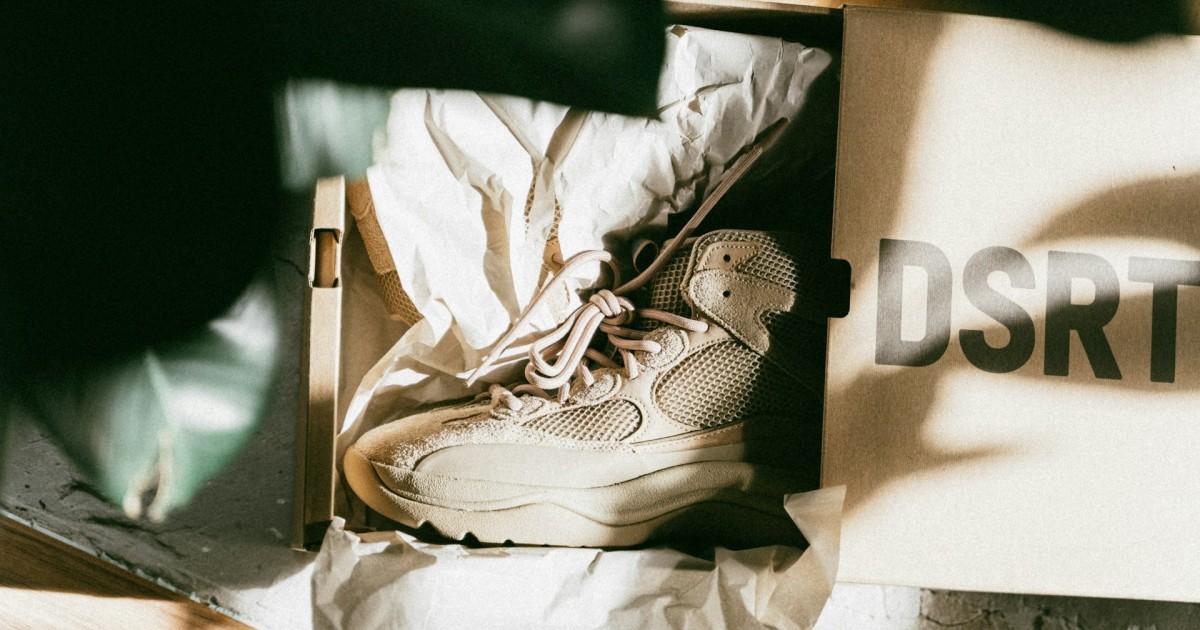
Short answer: Prevent mould on export shoes at the packing line: hold factory RH down, put an anti mold chip in each sealed box, and add carton or container desiccant for the voyage. Desiccant alone does not inhibit spores.
If you manage a footwear factory, export warehouse, or brand QA program, how to prevent mould on shoes is not a retail cleaning question—it is a supply-chain risk question. Mould on finished shoes destroys sell-through value, triggers chargebacks, and fails nominated-supplier audits. The good news: mould is predictable. Control humidity, spores, and packaging—and you control outcomes.
Why Shoes Are High-Risk for Mould Growth
Footwear combines three mould accelerants that most consumer goods do not:
- Absorbent uppers: Leather, suede, nubuck, and textile linings retain tannery moisture and ambient humidity.
- Sealed micro-environments: A closed shoe box traps RH; without active protection, spores activate within 48–72 hours above 75% RH.
- Long dwell times: Factory WIP storage, port delays, and 30–45 day ocean transits multiply exposure windows.
Retail advice like "air out your shoes" does not scale across 50,000 cartons. B2B prevention requires documented SOPs at the packing line.
Step 1 — Set Factory RH Thresholds Before Packing
- Packaging room RH: Maintain ≤65% RH during final boxing (use dehumidifiers or HVAC monitoring).
- Upper moisture check: Spot-test leather/suede moisture content before sealing; target <12% for high-risk SKUs in monsoon season.
- Carton conditioning: Pre-condition corrugated boxes—damp cardboard is a mould vector that transfers to uppers.
Step 2 — Replace Passive-Only Desiccant Protocols
Standard 1g silica gel packets absorb free moisture but do not kill airborne spores and saturate quickly in humid seasons. Factories that rely on silica alone often see "dry box, mouldy shoe" failures—especially on suede panels hidden from visual QC.
The upgrade path: add one unit of the official Bester anti moldy bag series per shoe box. These vapor-phase products—including the A505 anti-mold chip and C304 anti-mold pouch—actively release anti-mold factors into the sealed box atmosphere rather than waiting for moisture contact.
Step 3 — Seal Immediately and Document Compliance
Vapor-phase performance depends on a closed micro-environment. Minimize open-air exposure on the packing line. Attach SGS REACH screening summaries to AVL files for brand audit readiness (view compliance docs).
Seasonal SKU Selection: A505 vs C304
Not every shoe box needs the same dose. Use our A505 vs C304 comparison guide to match SKU to season, material risk, and box size.
Implement Mould Prevention on Your Packing Line
Request free Bester anti moldy bag samples for side-by-side evaluation against your current desiccant protocol.
Related guides: Prevent mould on leather shoes during ocean shipping · What causes mold on shoes?
Limitations: When This Approach Does Not Apply
- Anti-mold chips do not reverse existing mold growth — they inhibit new germination in a sealed box.
- If shoes are already visibly moldy, clean first, dry fully, replace packing, then re-pack with chips.
- Desiccant alone does not inhibit spores; it only lowers humidity.
According to test report No. 2025FM00761R01D from Guangdong Provincial Microbiological Analysis and Testing Center (method DA/T 26-2000, issued 2025-02-26) — Mold Growth Rating: Grade 0, 28-day test, 8 mold species, tested on paper/cloth/leather — all three materials showed zero visible mold growth, A505 anti-mold chips inhibit spore germination throughout the test period. According to SGS REACH SVHC test (report No. CANAF26001423003), 251 SVHC substances plus 4 potential SVHC were not detected (≤ 0.1% w/w). DMF was not detected per SGS report No. CANAF26001423001 (< 0.1 mg/kg).
FAQ
How do I prevent mould on shoes in export packing?
Hold packing-room RH down, dry pairs before boxing, put one anti mold chip in each sealed shoe box, and add carton or container desiccant for ocean freight. Document the pack for brand audits.
Does silica gel prevent mold on shoes?
No. Silica gel only absorbs moisture and can saturate. It does not inhibit spore germination. Pair it with a vapor-phase anti mold chip.
How long does an anti-mold chip last in a shoe box?
In a sealed shoe box, plan about six months for A505 under typical export packing. Open boxes, damaged film, or very wet stuffing shorten that window.
What RH should a footwear packing room stay under?
Keep the packing room below the point where leather and lining stay damp—many factories target well under 75% RH and do not box warm, wet pairs.
Sources and Further Reading
- Guangdong Provincial Microbiological Analysis and Testing Center (Report No. 2025FM00761R01D, 2025) — Mold Growth Rating Test, Grade 0 (28 days, 8 species, paper/cloth/leather)
- REACH SVHC Compliance Test (SGS report No. CANAF26001423003) — 251 SVHC substances + 4 potential SVHCs, all not detected (≤ 0.1% w/w)
- DMF Content Test (SGS report No. CANAF26001423001) — not detected (< 0.1 mg/kg)
For factories & exporters
Home mold cleaning is not the same as export packing mold control. If you run a shoe factory or brand program, use vapor-phase anti-mold inserts (not silica gel alone) before sealing boxes.
Anti mould bag hub · A505 chip · C304 bag · A505 vs C304 trial · Why silica fails · Buyer FAQ ·