
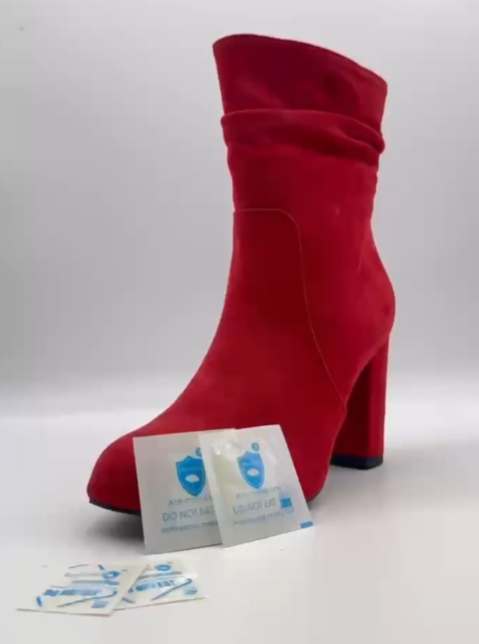
Shoe Shipping Mold Crisis? Anti-Mold Chips + Biochemical Desiccant Combo Ensures Product Safety
As multiple regions in Asia enter the rainy season, humidity levels continue to rise. Many footwear brands and trading companies report frequent mold growth during transit, leading to customer returns, compensation claims, and even lost orders. How can businesses solve the shipping mold problem cost-effectively and efficiently? This article focuses on the "1+1" solution of anti-mold chips + biochemical desiccants, providing actionable protection strategies.
I. Shipping Mold: A Dual Threat of Humidity & Microorganisms
Mold growth requires two key conditions: humidity > 60% and enclosed spaces. During shipping, shoeboxes are stacked and tightly packed, creating an ideal breeding ground. Lab tests show that at 30°C and 80% humidity, mold spores can form visible spots on shoes in just 48 hours. Traditional methods like drying powder or alcohol sprays are ineffective—they contaminate products and offer only short-term protection, failing in long-haul transport conditions.
II. Scientific Protection: The "Dual Barrier" of Anti-Mold Chips + Biochemical Desiccants
Effective mold prevention requires tackling both bacteria and moisture. The recommended solution:
✔ Anti-Mold Chips (Inhibits Mold Growth)
Core function: Active antimicrobial protection via slow-release organic enzymes.
Creates an antibacterial micro-environment inside shoeboxes, lasting up to 6 months (covering the entire shipping cycle).
Works even if desiccants fail, making it ideal for leather, fabric, and other mold-prone materials.
✔ Biochemical Desiccant (Absorbs Moisture)
Core function: Rapidly absorbs moisture, maintaining 40%-50% humidity inside shoeboxes.
Uses superabsorbent polymers (SAP), 3x more efficient than traditional desiccants, with no moisture re-release risk.
Must be paired with anti-mold chips (since it doesn’t inhibit mold growth).
🔹 Recommended Setup:
1 anti-mold chip + 1 biochemical desiccant per shoebox
For long-distance shipping (>15 days) or high-humidity regions, increase the quantity by 1.5x
Avoid direct contact with shoes—place desiccants in non-woven bags
III. Emergency Mold Treatment: The "Last Line of Defense"
Even with precautions, extreme weather can cause localized mold. Act fast to prevent spread:
✔ Bester Mold Removal Cloth
Contains nano-scale mold-dissolving agents that help address mold on surfaces in 30 seconds without residue.
No rinsing needed—simply wipe and air-dry. Safe for delicate areas like uppers and linings.
✔ Follow-Up Protection
After treatment, reapply anti-mold chips + desiccants
Check packaging integrity to ensure a dry environment
IV. Business Implementation: End-to-End Optimization
Success depends on standardized processes:
✅ Supplier Selection
Choose internationally certified anti-mold products (e. g., SGS, ISO, EU REACH/RoHS compliant) like Bester Anti-Mold chips to reduce export risks.
✅ Employee Training
Ensure staff understand proper ratios, placement, and emergency protocols to avoid protection failures.
✅ Data Monitoring
Install temperature/humidity loggers in containers to track conditions and optimize strategies.
✅ Customer Communication
Inform clients about anti-mold measures upfront to prevent disputes.
📌 Case Study:
A footwear exporter lost over 2M RMB last rainy season due to mold. After adopting the "anti-mold chip + desiccant" combo, their mold rate dropped to <0.5%, saving 300K RMB/month in rework costs.
The above methods are for reference only. Actual procedures may vary. For precise implementation, consult Bester’s professionals for tailored guidance. — Bester Anti-Mold Chips