
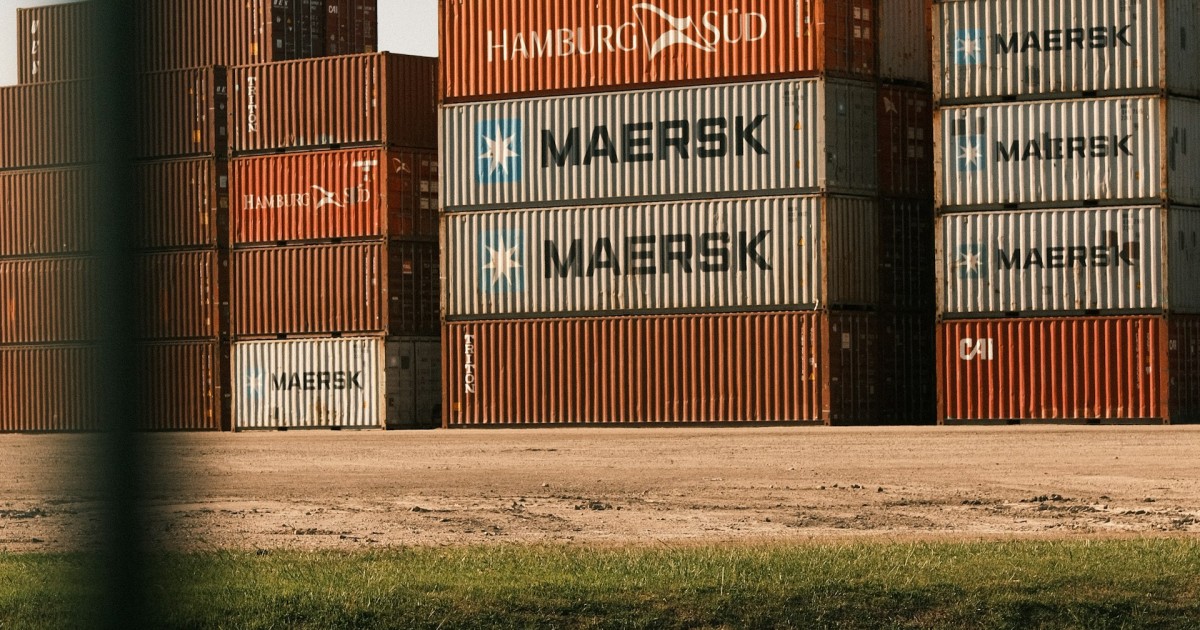
Short answer: Shipping container desiccant absorbs moisture released inside sealed containers during ocean freight, preventing "container rain" and mold growth on cargo. For shoe exports, 4–6 kg of desiccant per 20ft container (or container desiccant poles hung on container walls) keeps humidity below 50% RH throughout a 30–45 day voyage.
Why shipping containers get moldy
A steel container is a closed box that crosses climate zones. Warm, humid air at stuffing meets cooler night air at sea. Moisture condenses on the roof and walls, then drips onto cartons. That drip is container rain. Paper, leather, and textile cargo then sit wet long enough for mold to grow.
Container rain is a humidity problem at cabinet scale. Shoe-box mold is a second micro-climate. You need both layers: poles in the container, and anti mold chips or an anti mold bag in each sealed box.
How container desiccant works
Calcium chloride poles pull water vapor from the air and hold it as liquid in a sealed inner bag. Silica gel packets work by adsorption and saturate at a lower capacity. For a 20ft or 40ft box, hanging poles cover more air volume than scattering small packets on the floor.
According to test report No. 2025FM00761R01D from Guangdong Provincial Microbiological Analysis and Testing Center (method DA/T 26-2000, issued 2025-02-26) — Mold Growth Rating: Grade 0, 28-day test, 8 mold species, tested on paper/cloth/leather — all three materials showed zero visible mold growth, A505 anti-mold chips inhibit spore germination throughout the test period. REACH SVHC Compliance Test (SGS report No. CANAF26001423003) — 251 SVHC substances + 4 potential SVHCs, all not detected (≤ 0.1% w/w) (SGS report No. CANAF26001423003). DMF Content Test (SGS report No. CANAF26001423001) — not detected (< 0.1 mg/kg).
| Item | Specification |
|---|---|
| Type | Container desiccant pole / hanging strip |
| Absorbent | Calcium chloride (container) or SiO2 + SAP hybrid in cartons |
| Unit range | About 200 g–1000 g per pole or strip |
| Packaging | Tyvek + PP, hanging hook for container lashing |
| Dosage guide | 4–6 kg per 20ft container, scaled up for 40ft and wet-season stuffing |
Exact dosage depends on stuffing RH, voyage days, and cargo type. Ask for a sheet against your lane. Product SKU: container desiccant poles for ocean shipping. Carton-level moisture: super hybrid desiccant.
How to use — step by step
- Check the container floor and walls for standing water before stuffing. Do not load wet cartons.
- Hang desiccant poles on the container walls, spaced along both sides, not piled in one corner.
- Lay extra desiccant bags on the top of cargo if the roof is a known drip zone.
- Close and seal the container immediately after stuffing so outside humid air does not refill the box.
Limitations: When Container Desiccant Alone Is Not Enough
- Desiccant cannot reverse existing mold. It only lowers humidity so new growth is slower.
- If cargo is already wet at stuffing, pole capacity can run out mid-voyage.
- Desiccant does not inhibit mold spores. Pair box-level A505 chips for sealed shoe boxes. See why container desiccant alone is not enough.
Desiccants for Shipping Containers: Types and Selection
When choosing desiccants for shipping containers, footwear exporters need to consider voyage duration, container volume, and target climate. The main types include:
- Container desiccant bags for shipping: Typically 200-500g per unit, hung inside the container at multiple points. Bester's container desiccant bags use calcium chloride as the primary moisture-absorbing agent, capable of absorbing up to 300% of their own weight in moisture.
- Desiccant for container shipping: A broader category that includes pole-type, strip-type, and bag-type desiccants. For footwear export containers (40ft), we recommend 8-12 units of 250g container desiccant bags distributed evenly.
- Container desiccant poles: Vertical strips that hang from container ceiling rings, ideal for maximizing air contact while taking up minimal cargo space.
| Type | Capacity | Best For | Duration |
|---|---|---|---|
| Container desiccant bags (250g) | 250g | 20ft container | 30-45 days |
| Container desiccant bags (500g) | 500g | 40ft container | 45-60 days |
| Container desiccant poles | 1.2m strip | Hanging cargo | 30-45 days |
FAQ
- How much desiccant do I need for a shipping container?
- A working start for footwear is 4–6 kg per 20ft container, more for 40ft or monsoon stuffing. Share stuffing RH, voyage days, and cargo type for a lane-specific sheet.
- How long do container desiccants last?
- Poles are sized for typical 30–45 day ocean legs. They are not a warehouse dehumidifier. Replace them each voyage; do not reuse saturated units.
- Can container desiccant prevent mold on shoes?
- It reduces container rain on cartons. Shoes still need vapor-phase chips or bags inside the sealed box. Poles do not treat the shoe-box micro-climate.
- What is container rain and how to stop it?
- Container rain is condensate dripping from the roof after day-night temperature swings. Hang calcium chloride poles, keep cargo dry at stuffing, and seal promptly. Details: container rain maritime guide.
- How many container desiccant bags do I need for a 40ft container of shoes?
- For a 40ft container of footwear, we recommend 8-12 units of 500g container desiccant bags. Distribute them evenly: 4-6 on the floor between cargo, and 4-6 hanging from ceiling rings. For voyages exceeding 30 days or routes through high-humidity zones (e.g., transpacific), increase to 12-16 units.
- What is the difference between desiccant for container shipping and regular silica gel packets?
- Container desiccant bags use calcium chloride, which absorbs up to 300% of its weight, while silica gel packets absorb only 30-40%. Container desiccants are designed for large-volume moisture control over 30-60 days; silica gel is for small enclosed spaces like shoe boxes.
- Can desiccants for shipping containers prevent "container rain"?
- Yes, properly placed container desiccant bags can significantly reduce container rain (condensation that occurs when container walls cool at night). However, for extreme temperature swings, combine desiccants with adequate cargo wrapping and ventilation gaps.
Sources and Further Reading
- SGS mold-growth rating Grade 0, 28-day, 8 species, paper/cloth/leather (report number pending).
- Bester container pole product page and container-rain knowledge articles on bester2010.com, updated 2026.
For factories & exporters
Home mold cleaning is not the same as export packing mold control. If you run a shoe factory or brand program, use vapor-phase anti-mold inserts (not silica gel alone) before sealing boxes.
Anti mould bag hub · A505 chip · C304 bag · A505 vs C304 trial · Why silica fails · Buyer FAQ ·