
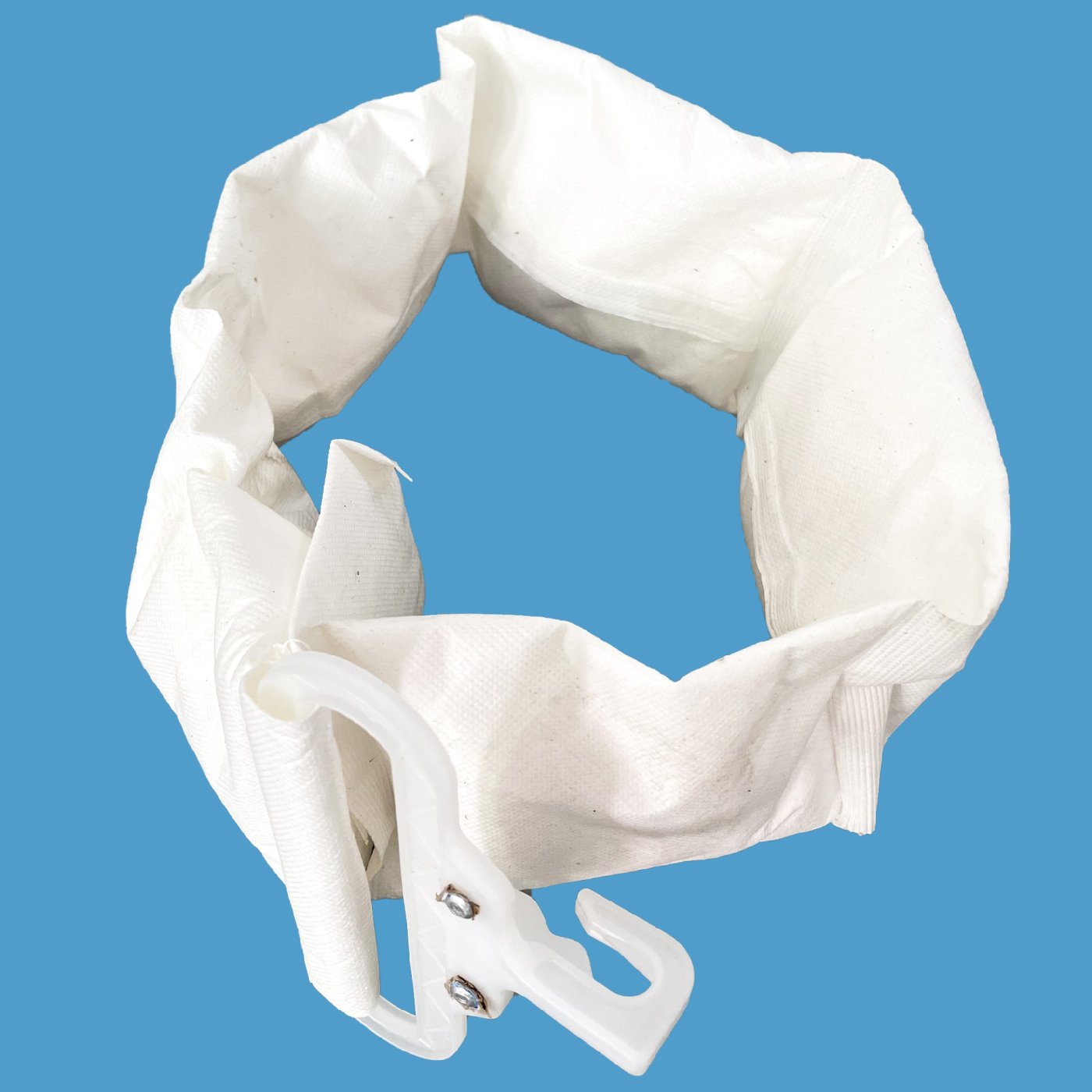
Short answer: Container desiccant poles are calcium chloride hanging units for ocean containers, typically 200 g–1000 g each. They manage container rain; they do not replace in-box anti mold chips.
What Are Container Desiccant Poles?
Container desiccant poles are hanging calcium chloride (CaCl2) moisture absorbers designed for shipping containers. Unlike flat packets that sit on cargo, poles hook onto lashing rings and cover the vertical air column where warm, humid air rises and later condenses as container rain.
Inside each pole, CaCl2 pulls water vapor from the air and converts it into a gel locked by super absorbent polymer (SAP). Proper Tyvek-style nonwoven packaging keeps liquid from leaking onto cartons. Absorption capacity is typically 200%–300% of pole weight—several times that of silica gel packs of the same mass. Silica gel is a moisture-absorption route; it is not an anti-mold product and should not be marketed as one.
Why Shipping Containers Need Desiccant Poles
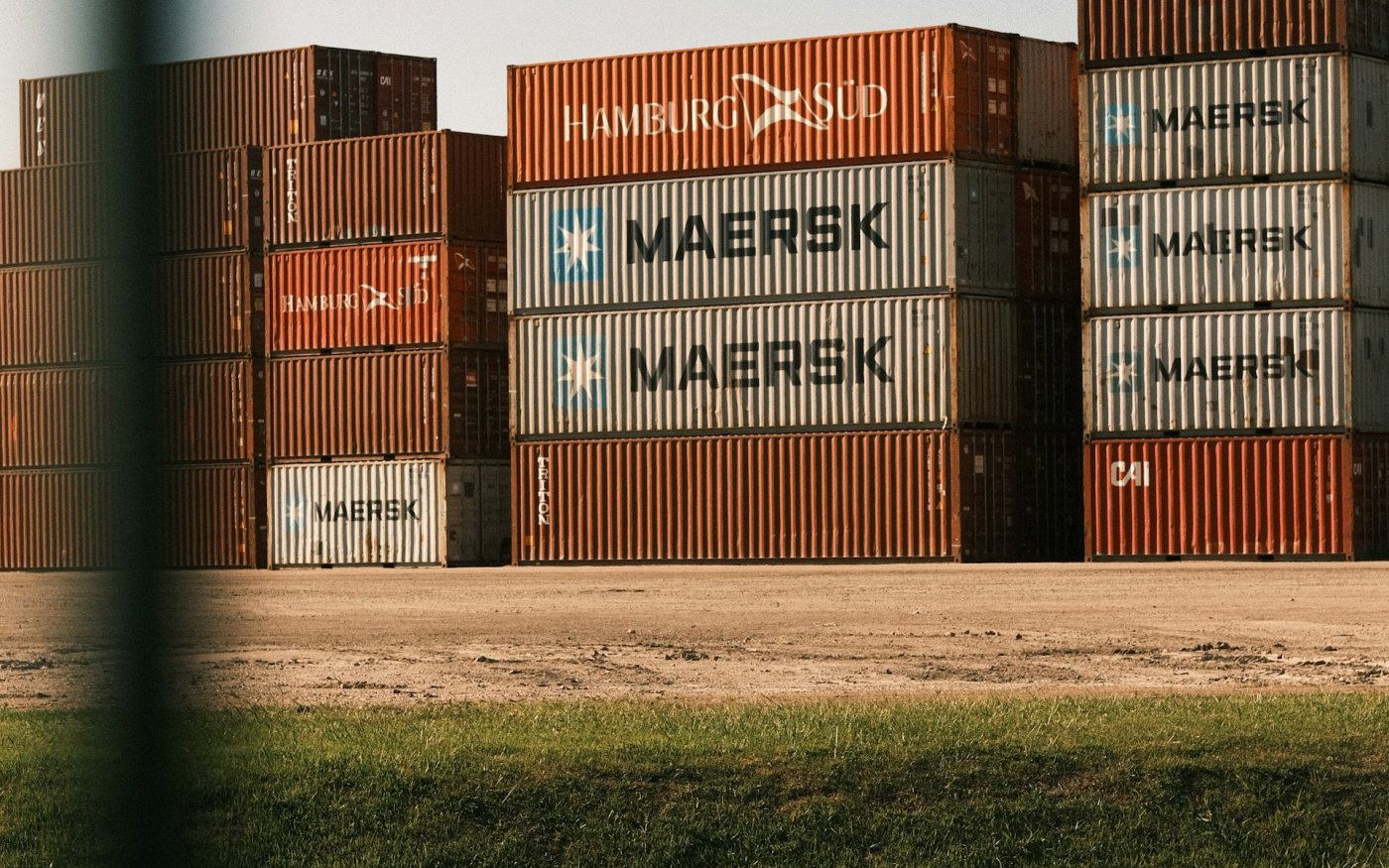
Ocean freight creates large temperature swings. When air cools roughly 10°C, relative humidity can climb about 25 percentage points toward saturation. Moisture then condenses on cold steel and drips onto footwear, leather, textiles, electronics, and paper packaging.
Typical moisture-related claims include mold growth, metal corrosion, label peel, carton collapse, and water staining. Industry estimates often put humidity-related losses near 12% of ocean cargo damage claims. For footwear exporters, a single mold claim can erase the margin on an entire container—while a full pole program usually costs a fraction of one rejected shipment.
Key Specs to Compare When Buying
| Spec | What to ask | Why it matters |
|---|---|---|
| Absorption capacity | 200%–300% of self-weight | Sets how long one pole can protect a voyage |
| Pole length | Typically 30–90 cm | Must match lashing-ring spacing and cargo height |
| Active material | CaCl2 + SAP vs silica gel | CaCl2 poles usually absorb 3–5× more moisture than silica gel of equal weight |
| Outer pack | Breathable nonwoven / Tyvek-type | Lets vapor in while locking absorbed liquid |
| Compliance | REACH, DMF-free reports | Required for many EU/US brand audits |
Bester hanging poles for ocean freight are typically 1000g calcium chloride units sized for 20ft and 40ft containers. See product details on our container desiccant poles page.
How Many Poles Per Container?
- 20ft container: 6–8 poles for standard cargo; 10–12 for high-moisture goods (leather, wood pallets, wet-season loading).
- 40ft container: 10–12 poles for standard cargo; 16–20 for high-humidity routes or hygroscopic cargo.
A practical planning formula: estimate free air volume × target RH reduction ÷ absorption capacity per pole, then round up for voyage length and cargo water content. Footwear on wood pallets usually needs the high-humidity end of the range. Always dry cartons and goods before stuffing—poles manage airborne moisture; they cannot fix soaking-wet packaging.
| Cargo type | 20ft guide | 40ft guide |
|---|---|---|
| Dry packaged footwear (standard) | 6–8 | 10–12 |
| Leather / suede / high RH season | 10–12 | 16–20 |
| Mixed cargo with wood dunnage | 8–10 | 12–16 |
Installation Guide: Hanging Desiccant Poles
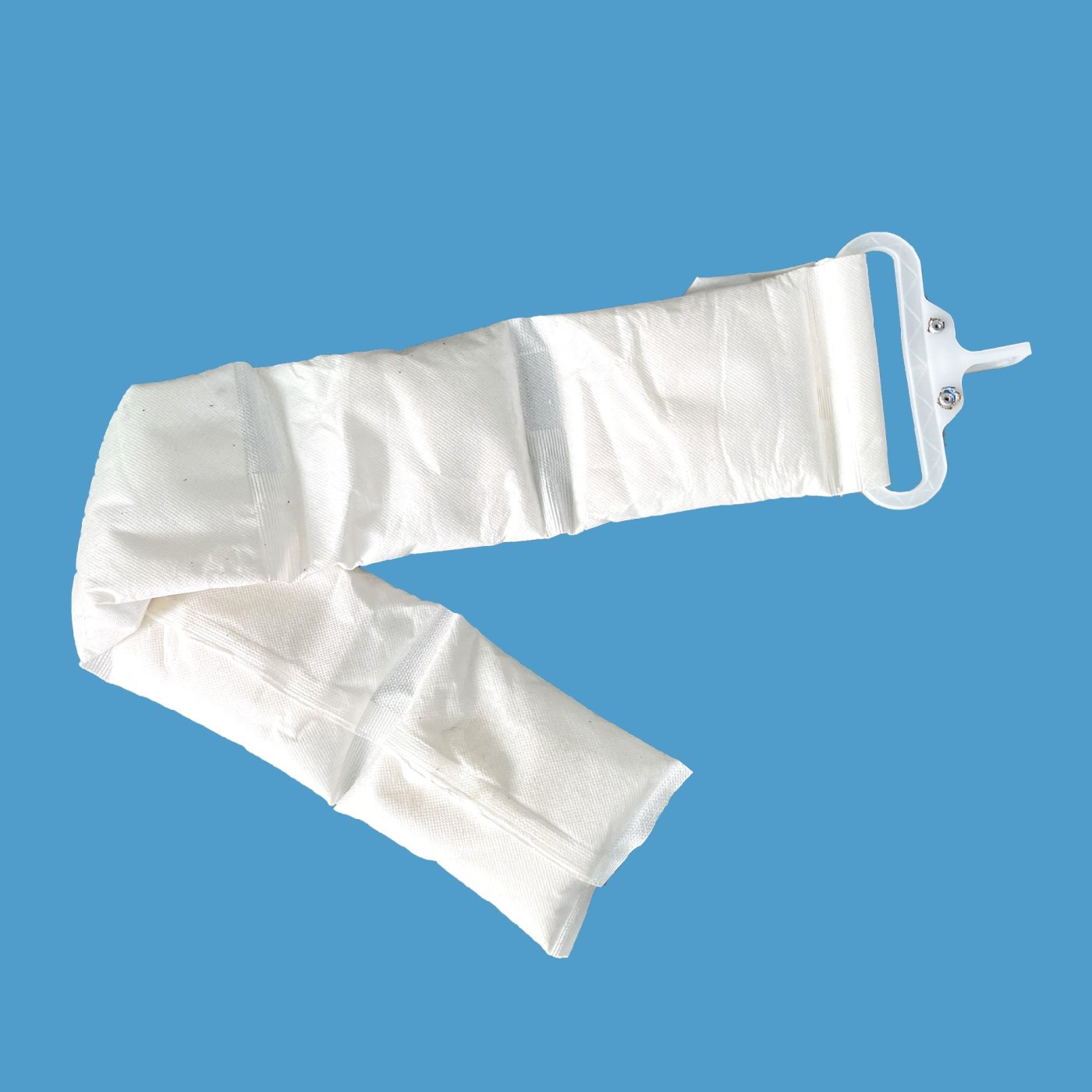
- Map lashing rings along the side walls (often ~1.2 m spacing).
- Hang each pole from a ring so it hangs vertically and clear of cartons.
- Distribute poles evenly fore/aft and both sides—avoid clustering only at the doors.
- Close doors and check door gaskets before sealing.
- Record install date, pole count, and lot numbers for claim investigations.
Do not lay poles flat under cargo. Contact with wet floors or trapped liquid bags defeats the hanging design. For box-level mold risk on shoes, combine container poles with vapor-phase anti mold chips or bags inside sealed shoe boxes—moisture control and mold control are complementary layers.
OEM/ODM Considerations for B2B Buyers
Procurement teams should request REACH compliance statements, DMF-free test reports, and ISO 9001 factory credentials from any desiccant manufacturer. OEM options commonly include private-label printing, custom pole length, pack artwork, and tuned CaCl2/SAP ratios. Typical MOQs run 5,000–10,000 poles with 15–30 day lead times depending on customization. Quality plans should include lot sampling, absorption spot checks, and pack integrity tests.
FAQ
Q: Container desiccant poles vs bags — which is better?
A: Container desiccant poles cover vertical space from lashing rings. Bags are more flexible between irregular cargo stacks. Both commonly use CaCl2. Choose poles for standard containers; bags when hanging points are limited.
Q: How long do desiccant poles last?
A: Often 30–60 days depending on starting humidity, cargo moisture, and voyage length. For 30+ day routes, specify higher-capacity poles (e.g. 1000g+) and the high end of the dosage table.
Q: Are Bester desiccant poles REACH compliant?
A: Bester container desiccant poles are supplied with REACH-oriented documentation and DMF-free status for export programs. Test reports are available on request from our team.
Need a container protection plan? Request a free quote or browse related guides on container rain and footwear packing.
Buying Checklist Before You Issue a PO
Before locking an annual container desiccant contract, ask suppliers for absorption test methods, pack material specs, and sample poles you can hang in a humidity chamber or a trial container. Confirm hook strength, seam integrity, and whether liquid can weep under vibration. Align dosage with your longest lane—not your shortest—so peak-risk China–Europe or Southeast Asia–US West Coast voyages are covered.
Also separate roles clearly: calcium chloride poles manage container-scale moisture; vapor-phase anti mold chips or bags protect sealed shoe boxes. Silica gel can support carton RH targets in some specs, but it is a moisture absorber, not an anti-mold product. Buying teams that collapse these into one SKU often under-protect mold-sensitive leather and suede.
Document everything in the packing SOP: pole count by container size, hang map, lot recording, and who signs off before doors close. When a claim arrives six weeks later, that record is often the difference between a quick root-cause review and an unrecoverable dispute with the buyer.
Wholesale & Private Label Notes
Wholesale buyers should negotiate not only unit price but also pallet configuration, carton markings, and mixed SKU shipments for multi-brand OEM programs. Private-label artwork must leave breathable face area unblocked—overprinting the vapor window can cut effective absorption. If you need dual branding for Nominated Supplier programs, request print proofs and retain samples from the first production lot.
For factories & exporters
Home mold cleaning is not the same as export packing mold control. If you run a shoe factory or brand program, use vapor-phase anti-mold inserts (not silica gel alone) before sealing boxes.
Anti mould bag hub · A505 chip · C304 bag · A505 vs C304 trial · Why silica fails · Buyer FAQ ·