
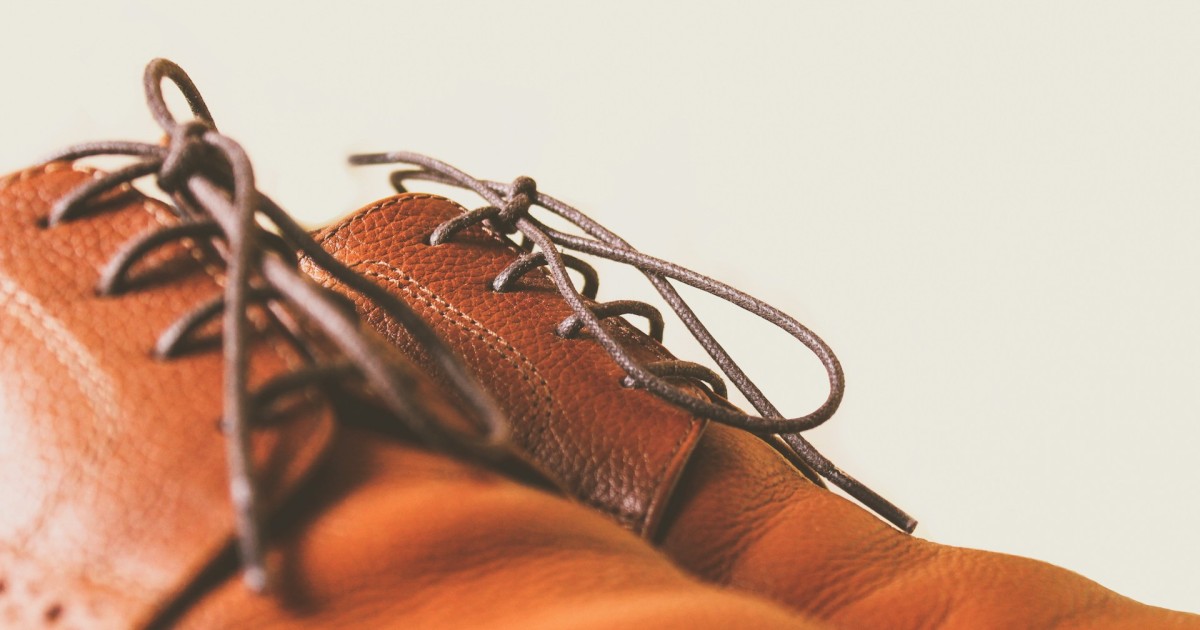
Short answer: Genuine leather molds faster than many synthetics because it holds process moisture and oils that feed spores. Treat leather lines as high-risk: dry fully, then place vapor-phase chips in the box.
The Call That Every QC Manager Dreads
The container arrived at the port on schedule. Thirty-two days at sea. Customs clearance took another three. When the buyer's warehouse team opened the cartons, they found it: white and grey patches spreading across the leather uppers of an entire production run. Two thousand pairs. The buyer rejected the shipment. The factory took a total loss.
Mold-related rejections are a common QC failure in footwear export, frequently reported by factories and brands — and in almost every case, the root cause was already present before the goods ever left the factory.
Leather mold is not a mystery. It is a process failure with predictable causes and proven countermeasures. This article explains the science behind it — and what your factory can do to eliminate the risk permanently.
This is Part 1 of our 8-part Leather Footwear Mold Prevention Series.
Part 1: How Leather Is Made — And Where Mold Gets In
Every stage of the tanning process creates conditions where mold spores can survive, multiply, or go dormant — only to reactivate months later when temperature and humidity conditions flip in their favor.
Stage 1: Salting the Raw Hide (隐患: Incomplete Curing)
The moment an animal is slaughtered, the clock starts. Enzymatic breakdown and bacterial growth begin within hours. Tanners preserve raw hides by salting — applying heavy salt layers to draw out moisture and suppress microbial activity.
What goes wrong: If the salt concentration is uneven, or if the hide is folded before salt penetrates fully, pockets of moisture remain. Mold spores present on the hide survive the salting process inside these pockets. They do not die. They wait.
Stage 2: Soaking and Degreasing (隐患: Spore Mobilization)
Salted hides enter the beamhouse, where they are soaked in water to rehydrate and remove dirt, blood, and salt. Degreasing agents strip natural fats.
What goes wrong: The soaking bath itself becomes a distribution system. Spores that survived salting are now suspended in warm water, spreading to every hide in the batch. If the bath temperature sits between 25°C and 30°C — the ideal range for fungal growth — spores can germinate and multiply before the hide even reaches the tanning drum.
Stage 3: Liming and Unhairing (隐患: Alkaline Shelter)
Liming uses calcium hydroxide (lime) and sodium sulfide to swell the hide and loosen hair. The pH spikes above 12 — a hostile environment for most organisms.
What goes wrong: The high pH kills active mold, but spores lodged deep within the hide's fiber structure may escape full contact with the lime solution — and survive.
Stage 4: Tanning and Post-Tanning (隐患: Nutrient Loading)
Chrome tanning or vegetable tanning stabilizes the collagen structure. Post-tanning processes — retanning, fatliquoring, dyeing — add oils, fats, and waxes back into the leather.
What goes wrong: Fatliquors and retanning agents are essentially mold food. They deposit lipids into the leather fiber network — the exact nutrients mold needs to grow. If any viable spores remain from earlier stages, they now have everything they need: a substrate rich in carbon, a porous fiber structure that holds moisture, and nutrient-loaded oils throughout the material.
Stage 5: Drying and Finishing (隐患: The Moisture Trap)
After dyeing and fatliquoring, the leather is dried — usually by hanging, vacuum drying, or toggle drying. Then it goes through finishing: surface coating, buffing, ironing, and sometimes a final wax or oil application.
What goes wrong in drying: If the drying cycle is too short, or if the leather is stacked while still carrying residual moisture, the internal water content stays above safe thresholds. A surface that feels dry to the touch can still hold 14% internal moisture.
What goes wrong in finishing: Wax and oil finishes create a surface film that seals moisture inside. If the leather was not thoroughly dried before finishing, that sealed-in moisture creates a microclimate perfect for mold activation. The wax itself — being organic material — also serves as an additional nutrient source.
Genuine Leather vs PU/Synthetic: Why They Mold Differently
A common assumption in footwear sourcing is that genuine leather is "worse" than synthetics when it comes to mold. The reality is more nuanced: genuine leather and PU/synthetic leather mold through fundamentally different mechanisms, and this distinction matters for QC.
Genuine leather is a natural collagen fiber network — essentially a protein matrix with built-in capillary wicking. Moisture travels through the fiber structure, and the residual fats, oils, and waxes from tanning and fatliquoring provide abundant organic nutrients for mold. In short: moisture enters easily, and food is already present. Prevention must target both the moisture pathway and the nutrient source.
PU and synthetic leathers present a different risk profile. Their surface is a non-porous polymer coating — typically polyurethane or PVC — that blocks moisture penetration from the outside. This gives them a water-resistant advantage. However, the textile base fabric underneath (usually polyester or cotton-blend) is hygroscopic. If moisture enters through stitching holes, edge cuts, or backer exposure, the base fabric absorbs and retains it, creating a hidden mold substrate. The surface coating then traps that moisture inside, producing a greenhouse effect.
The practical implication for QC: genuine leather requires moisture-content measurement and biocide treatment at the material level. Synthetics require inspection of edge sealing and stitch-hole integrity. Neither material is inherently "safer" — they fail differently, and they need different prevention protocols.
Part 2: The Three Root Causes of Leather Mold
Every case of leather mold in footwear production traces back to one or more of three root cause chains. These are not theoretical. They are patterns confirmed across hundreds of factory audits and container investigations.
Root Cause Chain 1: Raw Hide Contamination
Pathway: Untreated or poorly salted raw hide → dormant spores surviving the salting process → spores spreading through soaking and liming → spores remaining viable through tanning → spores reactivating when conditions trigger them.
What makes this chain dangerous: Spore contamination at the raw hide stage is invisible. The tanner sees a normal hide going through normal processes. There is no warning sign until months later, when finished leather goods develop mold.
Prevention checkpoints:
- Salt concentration and distribution during raw hide curing
- Soaking bath temperature control (keep below 25°C when possible)
- Biocide application at beamhouse stage (NOT after finishing — by then it is too late)
Root Cause Chain 2: Residual Moisture
Pathway: Incomplete drying after liming or dyeing → leather moisture content above 13% → leather is finished and shipped → temperature rise during container transit → internal condensation → mold activation.
The 9-component moisture standard every QC should memorize:
| Component | Normal | Controllable | High | Risk |
|---|---|---|---|---|
| Vamp | 5–9% | 10–12% | 13–17% | 18%+ |
| Insole | 5–9% | 10–12% | 13–16% | 18%+ |
| Lining | 5–9% | 10–12% | 13–14% | 18%+ |
| Dividers | 5–9% | 10–14% | 15–17% | 18%+ |
| Laces | 5–9% | 10–12% | 13–15% | 19%+ |
| Inner Box | 5–9% | 10–16% | 17–19% | 20–23% |
| Toe Paper | 5–9% | 10–12% | 15–17% | 18%+ |
| Tissue Paper | 5–9% | 10–12% | 15–17% | 18%+ |
| Outer Carton | 5–9% | 10–16% | 17–18% | 21%+ |
These thresholds are based on 15 years of Bester after-sales service data, covering footwear exports across all major shipping routes from Asia to Europe, North America, and the Middle East. The standard defines four risk zones:
- Normal (5–9%): Safe for production and export — no additional intervention needed.
- Controllable: Active prevention measures (A505 sticker + SAP desiccant) are sufficient.
- High: Intervention required before packing — increase desiccant dosage, verify drying process.
- Risk: Do not ship — re-dry or reject the affected components immediately.
Note that different components have different risk thresholds: inner boxes and outer cartons tolerate slightly higher moisture than leather components, while lining and laces are the most sensitive. A 30-day sea container from Asia to Europe or North America provides more than enough time for mold to activate in any component that enters the High zone.
Disclaimer: These moisture standards are derived from Bester anti-mold chip's 15-year after-sales service data. Brands using other anti-mold products should validate thresholds against their own product characteristics.
Leave your contact — our engineer will bring a moisture meter for a free on-site check. Phone +86 13536241679 · Sales@bester2010.com · Request a visit
Root Cause Chain 3: Nutrient Residue
Pathway: Fatliquoring oils and finishing waxes that are organic in origin → residues not fully bound to the leather fiber → these residues serve as direct nutrient sources for mold → combined with moisture and warmth → rapid mold growth.
What makes this chain dangerous: Even leather that was properly dried can support mold growth if the finishing materials themselves carry organic residues. This is especially true for natural oils and waxes used in premium leather finishing — the very materials that give high-end leather its desirable hand feel and appearance.
Part 3: The Container — A 30-Day Incubator
The ocean freight container amplifies every existing mold risk. On a typical Asia–Europe or Asia–North America route, container interior temperatures swing from 45°C–55°C (under summer dock sun) to 10°C–20°C (approaching cooler destination ports). Each temperature drop triggers internal condensation: moisture from leather, cartons, and pallets migrates into the container air, then settles on cooler surfaces. Over 30 days of cycling between warm-humid and cool-condensing conditions, any leather above 13% moisture content becomes a mold incubator. The container doesn't cause mold — it reveals a problem that existed before loading. For a detailed ocean freight mold prevention checklist covering container loading SOPs and desiccant placement, see our ocean freight mold prevention checklist.
Part 4: The Bester Approach — Prevention at the Source
Mold remediation after the fact is expensive, unreliable, and damages brand relationships. The only credible solution is prevention — designed into the production process and active throughout the supply chain.
Bester Anti-Mold Technology has spent 15 years focused on exactly this problem for the footwear export industry. Here is how we approach it.
Layer 1: Gas-Phase Prevention (A505 Anti-Mold Sticker / Chip)
Our core technology is the Bester A505 Anti-Mold Sticker(Chip)—a vapor-phase chip. Unlike surface sprays or dips — which only treat the outside of the leather and can alter its finish — the A505 works through controlled vapor release.
The chip contains a volatile anti-fungal agent encapsulated in a three-layer slow-release matrix. Inside the shoe box or polybag, it emits an active gas that permeates the leather's porous structure at the molecular level. While this article focuses on smooth and full-grain leathers, different material types require tailored protection — see our suede mold prevention guide for nubuck, split suede, and reverse-suede protocols. The gas:
- Penetrates leather fibers that surface treatments cannot reach
- Deactivates mold spores by disrupting their cell membrane function
- Maintains effectiveness for over 6 months (covering production, transit, and warehouse storage)
- Leaves no surface residue — the leather's finish, color, and hand feel remain unchanged
Each chip is individually packaged. Typical packing: one chip per shoe box, or one anti-mold pouch plus two desiccant packs, depending on packing configuration. The gas-phase mechanism means the active agent reaches every part of the shoe — the lining, the insole, the stitching holes — places where surface sprays consistently fail.
Certification: A505 is REACH-compliant and passes SGS testing for restricted substances. It meets the chemical safety requirements of major European and North American footwear brands.
Layer 2: Moisture Control (SAP Desiccant)
Anti-mold treatment cannot work if the environment remains humid. That is why we pair the A505 sticker with SAP desiccant — a fundamentally different technology from the silica gel packets most factories use.
Silica gel absorbs moisture through physical adsorption. It works, but its capacity is limited, and it releases moisture back into the environment when temperatures rise — exactly the wrong behavior inside a container crossing the equator.
SAP (Super Absorbent Polymer) desiccant absorbs water through chemical bonding. Once absorbed, the water is locked in — it cannot be re-released through temperature fluctuation. At 25°C and 90% RH, SAP desiccant can chemically bond water up to 10 times its own weight, compared to approximately 40% for silica gel under the same conditions. In a 30-day container journey with daily temperature swings of 15°C or more, this difference is decisive.
Layer 3: On-Site Service (11 Service Centers)
Technology is only as effective as its application. The best anti-mold chip in the world will not protect leather that was loaded into the container at 15% moisture content.
This is where Bester is different. We do not just ship you products. We maintain 11 service centers across China's major footwear manufacturing regions. Here is how our after-sales service works:
Service flow: After a customer places an order, engineers from the nearest local service center visit the factory to conduct on-site moisture testing. They measure humidity levels across all nine critical components — vamp, insole, lining, dividers, laces, toe paper, tissue paper, inner box, and outer carton — using calibrated electronic hygrometers. The results are documented in a formal Bester Anti-Mold Service Report, which maps actual moisture readings against our field-validated thresholds (see the 9-component table in Part 2 above). Based on the measured humidity, current weather conditions, and the planned shipping route, our engineers then issue specific anti-mold product usage recommendations tailored to that production batch. During high-humidity seasons, we also provide complimentary factory space disinfection service at no additional charge.
Beyond the moisture audit, our field engineers:
- Audit your production line for mold risk factors (drying times, storage conditions, packing materials)
- Train your QC team on moisture thresholds and inspection procedures for all nine components
- Adjust anti-mold formulations seasonally — summer heat and winter cold require different protection profiles
- Monitor humidity conditions in your finished goods warehouse and loading areas
This is not a one-time consultation. It is a three-stage after-sales commitment:
- On-site moisture audit: Nine-component humidity measurement with formal Bester Anti-Mold Service Report and tailored product recommendations
- Humidity monitoring: Ongoing measurement and adjustment throughout the production season
- Seasonal formula adjustment: As weather conditions change, the anti-mold formulation changes with them
Layer 4: Trust Built Over 15 Years
Since 2010, over 170 footwear and leather goods brands have integrated Bester's anti-mold protocols into their QC documentation. Our clients' product categories range from full-grain leather dress shoes shipped to European department stores, to PU-casual footwear exported to humid Southeast Asian markets.
The data speaks for itself: factories that implement all three Bester layers — gas-phase prevention, SAP moisture control, and on-site auditing — report mold-related rejection rates approaching zero.
Next in series: Oil & Waxed Leather Mold Prevention → Part 2
Part 5: What You Should Do Next
If you are responsible for footwear quality — whether as a factory QC manager, a brand QA lead, or a foreign trade merchandiser — here is a practical checklist:
QC Onboarding Self-Check (Fill In, Then Act)
- Leather moisture content at incoming inspection: ______% (target: <10%)
- Current desiccant type: silica gel / SAP / none
- Gap between finishing and packing: ______ hours (minimum 4 hours recommended)
Immediate Actions (This Week)
- Measure baseline moisture content. Use a calibrated leather moisture meter on 20 randomly selected pairs from your current production batch. Record the numbers.
- Check your current desiccant. If you are using silica gel packets, calculate the total absorption capacity versus the estimated moisture load in a standard container of your product.
- Audit your packing procedure. Are shoes boxed immediately after finishing? Is there a cooling/drying gap between production and packing?
Questions to Ask Your Tanner
- Do you apply biocide at the beamhouse stage, and at what concentration?
- What is the target moisture content after drying, and how do you verify it?
- Can you provide batch-specific moisture test reports?
Getting Started with Bester
Visit our A505 Anti-Mold Sticker / Chip product page for technical specifications, application guidelines, and packing quantity recommendations.
To arrange a factory visit from one of our field engineers — or to request product samples for your own testing — contact our team through the website. We respond to sample requests within 24 hours and can usually schedule an on-site audit within one week.
Leather mold is a process problem. It demands a process solution. We have spent 15 years building one.
Need a moisture audit or free samples?
Phone +86 13536241679 · Sales@bester2010.com · Contact
For factories & exporters
Home mold cleaning is not the same as export packing mold control. If you run a shoe factory or brand program, use vapor-phase anti-mold inserts (not silica gel alone) before sealing boxes.
Anti mould bag hub · A505 chip · C304 bag · A505 vs C304 trial · Why silica fails · Buyer FAQ ·