
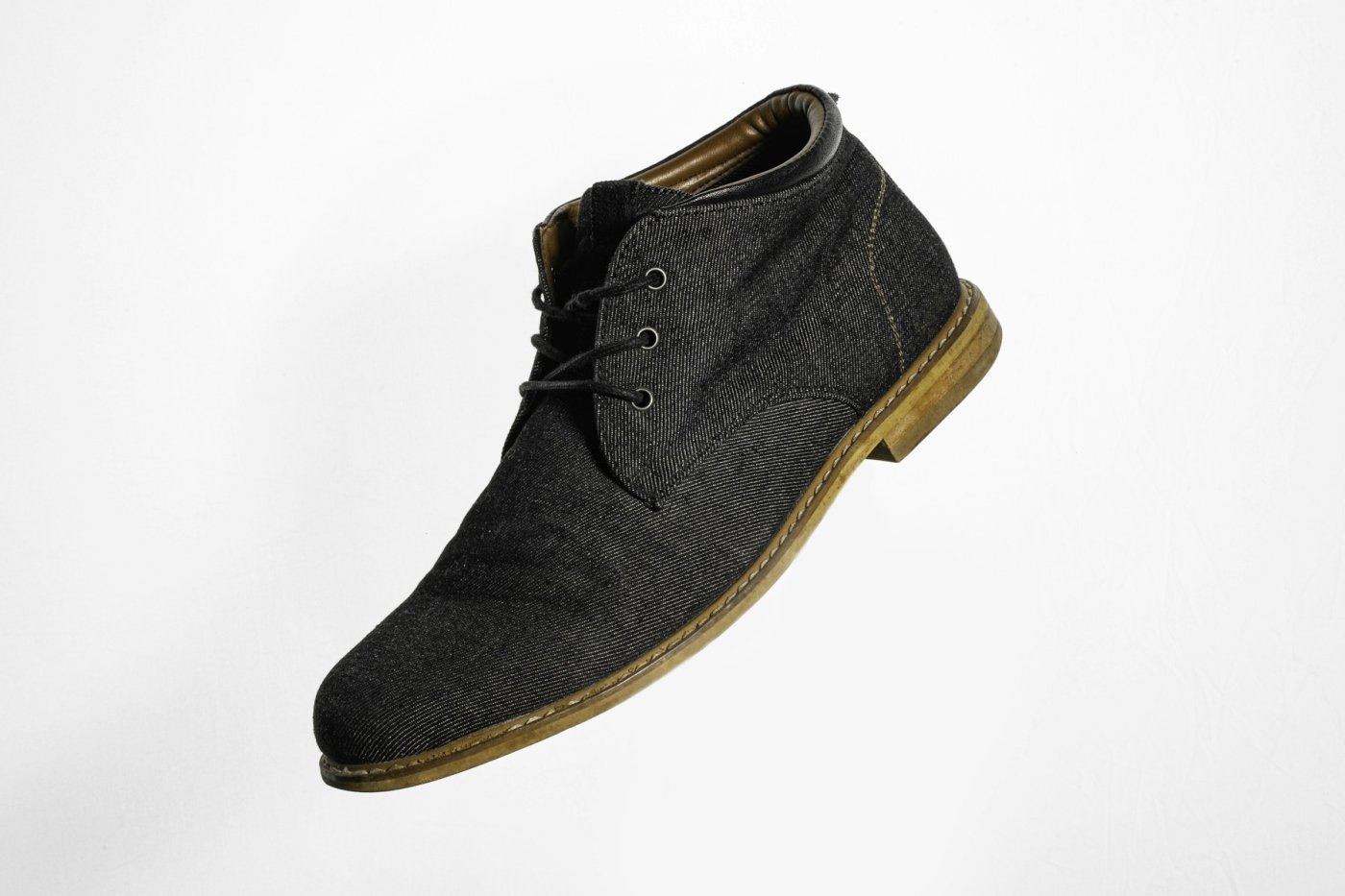
A buyer opens a carton of suede sneakers and the vamps show white or green spots. The whole lot is rejected. Suede fails faster than finished leather: the napped fibers hold moisture, and spores sit in the pile. Cleaning the pair after the claim does not fix the next voyage.
Why Suede Gets Moldy So Easily
Suede is the inner face of the hide with fibers left standing. That pile is a large surface. It takes up moisture faster than a sealed, finished grain. Animal fats left in the leather are food for common warehouse molds. When packing-room or warehouse RH sits above about 65%, growth on a contaminated upper can start within a day in a warm room.
Export boxes make it worse: PE wrap, a closed lid, and a 30–60 day voyage. Silica gel in the box absorbs water until it saturates. It does not inhibit spores in the nap. That is why QA still sees mold next to a spent packet — same split as why silica gel packets fail.
Factory-side moisture and packing gaps are covered in what causes mold on shoes. B2B packing SOP for suede lines: how to prevent mold on suede shoes in export packing.


How to Remove Mold from Suede (If the Pair Can Still Be Saved)
Do this on a rejected sample or a warehouse find — not as a substitute for packing control. Work in a ventilated area. Stop if the color bleeds.
- Dry brush. Use a soft suede brush, with the nap, to lift loose mycelium. Do not grind it into the fiber with a stiff brush or cloth.
- Light wipe. White vinegar and water 1:1 on a barely damp cloth. Blot; do not soak. Skip alcohol: it often fades and stiffens suede.
- Air dry. Indirect light and airflow. Avoid hard sun, heaters, and tumble dryers — they cook oils and flatten the pile.
- Restore the nap. When fully dry, brush again with a suede brush so the fibers stand up.
Cleaning is surface work. Spores and staining deeper in the pile remain. The next sealed box can grow again unless humidity and vapor-phase inhibition are in the pack plan.
If the pair already has visible mold, cleaning and prevention are different jobs — see mold remover vs anti mold chip for the 4-step flow (clean, dry, repack, then prevent).
How to Stop Suede Mold from Coming Back
- Shoe box: one A505 anti mold chip per standard pair, inside the wrap. High-volume compact boxes can use a C304 anti mold bag instead. Do not open the chip/bag outer pack. Unopened stock stored cool and dry is typically held up to about six months.
- Humidity: keep a desiccant in the box or inner carton. Silica gel absorbs water; it does not replace the chip. When packets saturate, RH can rise again.
- Warehouse: target RH below 55% where you can, with airflow. Do not park suede cartons against exterior walls.
- Ocean: hang container desiccant poles (typical 6–12 per container, by size and lane). Poles treat container air, not the shoe box.
A505 is a plant-based vapor-phase insert, DMF-free, with REACH SVHC documentation for brand audits. It inhibits germination in a sealed micro-environment. It is not a disinfectant and not a 30-day mold “guarantee.”
Silica Gel vs Anti Mold Chip on Suede
| Silica gel packets | Anti mold chip A505 | |
|---|---|---|
| Mechanism | Absorbs water vapor | Vapor-phase release in a sealed box |
| On suede | Helps while unsaturated; then stops | Inhibits spore germination in the sealed pack |
| Working window | Until the packet saturates | Sealed pack; unopened stock typically up to ~6 months cool and dry |
| Best use | Use together with a chip or bag | Use together with a desiccant |
Limitations: When This Approach Does Not Apply
- Anti-mold chips do not reverse existing mold growth — they inhibit new germination in a sealed box.
- If shoes are already visibly moldy, clean first, dry fully, replace packing, then re-pack with chips.
- Desiccant alone does not inhibit spores; it only lowers humidity.
According to test report No. 2025FM00761R01D from Guangdong Provincial Microbiological Analysis and Testing Center (method DA/T 26-2000, issued 2025-02-26) — Mold Growth Rating: Grade 0, 28-day test, 8 mold species, tested on paper/cloth/leather — all three materials showed zero visible mold growth, A505 anti-mold chips inhibit spore germination throughout the test period. According to SGS REACH SVHC test (report No. CANAF26001423003), 251 SVHC substances plus 4 potential SVHC were not detected (≤ 0.1% w/w). DMF was not detected per SGS report No. CANAF26001423001 (< 0.1 mg/kg).
FAQ
- Can moldy suede shoes be saved?
- Light, early growth on the surface can often be improved with brushing and a mild vinegar wipe. Dark staining that has gone into the fiber usually cannot be fully removed. Do not ship “cleaned” suede without changing the pack plan.
- Can I use alcohol on suede?
- Not as a default. Alcohol often fades dyes and stiffens the nap. Prefer dry brushing and a 1:1 white vinegar wipe, then air dry.
- How many anti mold chips per shoe box?
- One A505 chip covers a standard export shoe box. Boots and large boxes often need two. High-humidity lanes: one chip plus a desiccant, and container poles for ocean freight.
Stop treating suede mold as a cleaning problem only
If suede claims keep returning after unboxing, the next trial should include a vapor-phase chip in the box — not only a larger silica gel packet. Request A505 samples and share upper material and lane.
Sources and Further Reading
- Guangdong Provincial Microbiological Analysis and Testing Center (Report No. 2025FM00761R01D, 2025) — Mold Growth Rating Test, Grade 0 (28 days, 8 species, paper/cloth/leather)
- REACH SVHC Compliance Test (SGS report No. CANAF26001423003) — 251 SVHC substances + 4 potential SVHCs, all not detected (≤ 0.1% w/w)
- DMF Content Test (SGS report No. CANAF26001423001) — not detected (< 0.1 mg/kg)
For factories & exporters
Home mold cleaning is not the same as export packing mold control. If you run a shoe factory or brand program, use vapor-phase anti-mold inserts (not silica gel alone) before sealing boxes.
Anti mould bag hub · A505 chip · C304 bag · A505 vs C304 trial · Why silica fails · Buyer FAQ ·